

 Predictive, descriptive, and prescriptive analysis
 Creating Dashboards and Reports in Power BI
 Machine learning and artificial intelligence
 Database administration
 Database tuning
 Database implementation
 Database recovery plan
 Process automation
 Custom application development for desktop, web, and mobile
 API systems integration
 Big Data analysis
 Data integration
 Data cleaning
 Data streaming solutions
 Cloud solutions management
 Cloud architecture design
 Cloud services implementation
 Cloud service migration


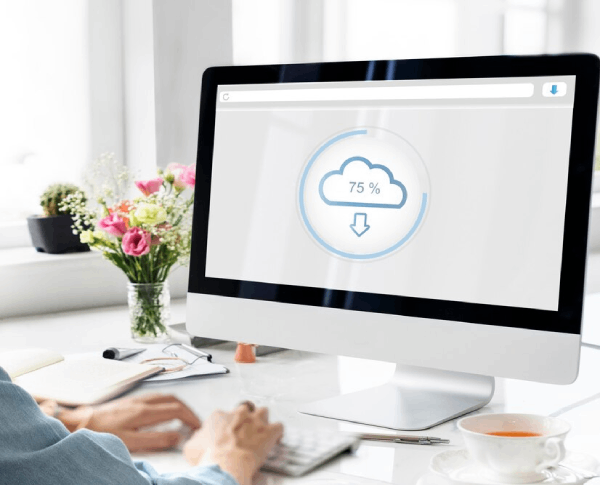
Cloud migration is a key process for companies seeking to improve their technology infrastructure and adapt to a more flexible and scalable environment. Essentially, it involves moving applications, data, and systems from on-premises infrastructure or data centers to a cloud computing platform. This transition not only optimizes operational costs but also provides greater agility, security, and growth capacity for any organization.
What is cloud
migration?
Cloud migration involves moving technological resources—such as applications, data, or even entire workloads—from on-premises physical servers or data centers to a public, private, or hybrid cloud. This process can be gradual or complete, depending on the company’s needs and objectives.
One of the main benefits of cloud migration is the ability to reduce operational costs by eliminating the need to maintain local infrastructure. Through cloud service providers like Amazon Web Services (AWS), Google Cloud, or Microsoft Azure, businesses can scale their operations flexibly, pay only for the resources they use, and ensure greater security in data storage and processing.
Types of
Cloud Migration
There are several approaches and types of cloud migration that businesses can consider:

Complete Migration:
This type of migration involves moving all systems, applications, and databases from a physical data center to the cloud. It is an ideal solution for companies looking to completely detach from local infrastructure and take full advantage of the cloud’s benefits, such as cost savings on equipment maintenance and access to advanced tools.

Cloud-to-Cloud Migration:
Some companies that are already in the cloud may choose to switch service providers to take advantage of better offers, services, or pricing. This process, known as cloud-to-cloud migration, is becoming increasingly common.
Hybrid Migration:
Not all companies want to move all their systems to the cloud right away. A hybrid migration combines cloud infrastructure with on-premises systems, allowing organizations to keep some critical systems on local servers while taking advantage of the cloud for other services.

Specific Application and Database Migration:
This approach involves moving only selected applications or databases to the cloud, making it ideal for testing its benefits without committing to a full migration.
Benefits of Cloud Migration with Lion Data
At Lion Data, we understand that every company has unique needs, which is why our cloud migration expertise is tailored to each specific case. The benefits of migrating with us include:
Reduction of operationalcosts:
We help transform capital expenses into operational expenses by eliminating the need to purchase and maintain physical infrastructure. You pay only for what you use, optimizing your resources to the fullest.
Optimized Performance:
Automation solutions can easily adapt to business growth, integrating new processes without the need to redesign the entire system.
Scalability:
With Lion Data, you can scale up or down the resources you need according to demand, allowing your company to be more agile and flexible.
Enhanced Security:
We work with leading cloud service providers to ensure that your data is secure at all times. We implement advanced security measures, including encryption and continuous monitoring.
Challenges and How Lion Data
Supports You in the Process
Migrating to the cloud can present some challenges, but at Lion Data we are here to guide you every step of the way:

Security and Compliance:
Migrating critical data can be complicated. At Lion Data, we follow best security practices and ensure that your company complies with all necessary regulations.

Staff Training:
We understand that every company needs time to adapt to new technologies, which is why we provide training to your teams to ensure a smooth transition.

Careful Planning and Execution:
Our experience across multiple sectors allows us to plan and execute migrations without disrupting your company’s daily operations.
How to Get Started with Lion Data?
Taking the step towards cloud migration may seem challenging, but at Lion Data we are here to make the entire process easier. The first step is to conduct a detailed assessment of your needs and goals. Based on this information, we design a personalized strategy that maximizes the benefits of the cloud for your business.
From initial planning to configuration and optimization, our team of experts accompanies you through every phase.
We work closely with you to ensure that the migration is efficient, secure, and cost-effective.
Start your cloud migration with Lion Data today
If you’re ready to transform your infrastructure and take full advantage of the potential offered by cloud computing, Lion Data is your ideal partner! Contact us today to start the migration process and see how we can help you scale your business securely, efficiently, and flexibly.
Our commitment is to ensure that your transition to the cloud is not only successful but also drives growth and innovation in your company. Don’t wait any longer—take the next step into the future with Lion Data.
Frequently Asked Questions
How do I determine if my company needs a full or partial migration to the cloud?
The decision to undertake a full or partial migration depends on your company’s specific needs. A full migration is ideal if you want to fully leverage cloud infrastructure, while a partial or hybrid migration can be useful for maintaining some on-premises systems that are critical. At Lion Data, we conduct a detailed assessment of your operations and goals to design the migration strategy that best fits your business.
How does Lion Data ensure the security of my data during cloud migration?
At Lion Data, we implement best security practices at every stage of the migration. We use advanced encryption, continuous monitoring, and access management tools to protect your data both in transit and at rest. Additionally, we work with leading cloud service providers such as AWS, Google Cloud, and Microsoft Azure to ensure that your company complies with all international security regulations and standards.
What happens if some of my applications are not compatible with the cloud?
If certain applications are not cloud-compatible, there are several strategies that can be implemented. At Lion Data, we can choose to reconfigure the architecture or refactor the applications, adjusting them to work properly in the cloud environment. In some cases, we recommend replacing legacy applications with modern cloud-based solutions to improve efficiency and performance.